

The ultimate personalised clothing guide
Personalised clothing transforms ordinary garments into expressions of identity, branding and creativity. Whether you're looking to create standout corporate uniforms, memorable promotional items or one-of-a-kind personal pieces, understanding the various personalisation methods available will help you achieve great results. In this guide, we'll take you through the main types of personalisation, covering their pros and cons and showing you how to get started, whether it's a professional endeavour or just a fun hobby.

screen printing — consistent and efficient
Screen printing is the gold standard for personalised clothing, particularly when you want to make multiple items with identical designs. It basically involves creating a stencil (or screen) on a fine mesh for each colour in your design, then forcing ink through the gaps onto the fabric below. The process involves coating screens with light-sensitive emulsion, exposing them to UV light through your design transparency, then washing away unexposed areas to create a printing template which can be used again and again if it's looked after. Screen printing offers true creative flexibility. You can get everything from simple single-colour block images to complex multi-layered artwork with gradients and fine details. The technique is fantastic for reproducing bold graphics and artistic illustrations with clarity and vibrancy. You can even use speciality inks, such as metallic, glow-in-the-dark, and textured materials, to expand creative possibilities even further.
Screen printing can produce rich, opaque colours that maintain their intensity even on dark fabrics. The ink sits prominently on the fabric surface, creating a look and feel that screams quality. This, combined with excellent colour saturation, makes screen-printed garments visually striking when done professionally. However, you can also purposely go for a worn, vintage aesthetic using the technique, and it can look equally genuine. For businesses, screen printing delivers superb brand consistency across large quantities. Corporate uniforms, promotional merchandise and event t-shirts benefit from screen printing's ability to maintain colour accuracy across hundreds or even thousands of items. For maximum consistency, have your clothing supplier handle the screen printing as well, so the clothing and the prints match in colour, material, and style.
embroidery — colour-fast and high-quality
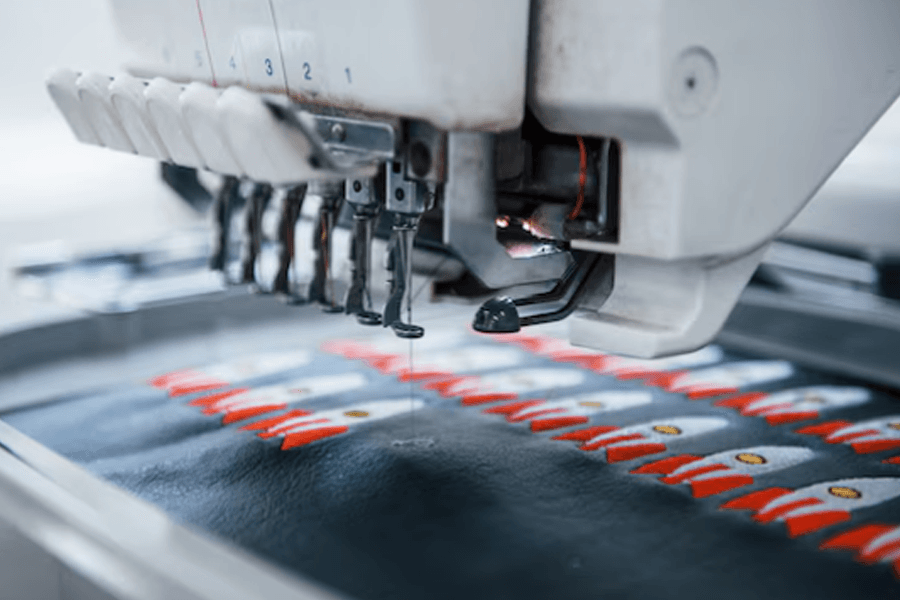
Although it's possible to hand-embroider onto pretty much any garment, professional embroidery uses specialised machines to stitch designs directly into fabric, quickly and precisely. The process involves digitising artwork into machine-readable files that guide the machines through precise stitching patterns, building up designs thread by thread with remarkable accuracy. Embroidery transforms designs into a form of three-dimensional artwork that becomes literally part of the garment. This technique excels at reproducing intricate details, text, name badges and logos that have a really professional look.
The combination of different thread textures and colours creates visual depth that's impossible to achieve through any printing method. Speciality threads, including metallic or reflective types, add luxury touches to any design. And because the threads are flexible and colour-fast, there's no drying out or cracking, as can happen with printing, especially after multiple washing and drying cycles. In corporate environments, embroidery is appreciated for its quality and permanence. Try it on polo shirts, jackets and caps to give out a professional appearance that reflects positively on your company's image.
alternative personalisation methods
Beyond printing and embroidery, several other specialist techniques offer unique benefits. Heat transfer vinyl can provide excellent results for small quantities and intricate designs, whilst sublimation printing works well on synthetic fabrics with photographic imagery. Appliqué work combines fabric pieces for textural interest (although it can be quite labour-intensive), and laser engraving creates subtle, permanent markings on some materials.
the professional advantage
Whilst DIY personalisation kits exist, professional services will consistently deliver superior, more consistent results that justify the investment. Professional printers have specialised equipment set up for consistent colour reproduction and proper ink curing across multiple colours. Their expertise in fabric selection, ink compatibility and design optimisation means costly mistakes are much more likely. Professional embroidery services offer digitising expertise that translates artwork into optimal stitch patterns, accounting for fabric characteristics and design complexity. Their commercial machines maintain consistent tension and stitch quality that's all but impossible to achieve when done by hand.
making the right choice
The best personalisation method for your needs depends on quantity requirements, design complexity, fabric types and intended use. Screen printing suits large orders with simple designs, whilst embroidery is excellent for durable, colour-fast applications. If you have any questions about clothing personalisation, we have decades of experience and will be able to advise you on the best route to take. Just drop us a line—we're happy to help