
The complete guide to buying wholesale workwear
Choosing the right workwear for your team affects their perception by the public, their safety, their comfort and their efficiency. Whether you're kitting out construction teams, healthcare professionals, office staff or hospitality teams, wholesale purchasing offers great advantages that extend far beyond simple cost savings. This guide explores how buying wholesale workwear can contribute to keeping your business harmonious and profitable.
the benefits of wholesale workwear
Buying workwear wholesale brings noticeable financial advantages, thanks to economies of scale. Bulk orders can reduce per-unit costs by as much as 40% compared to retail purchases, and often even more than that. Straight away, that means that you have made savings that can be reinvested into other business areas. And the larger your business, the greater the savings can become. But beyond financial benefits, wholesale purchasing has other advantages, too.
For a start, it ensures consistency across your workforce. Standardised uniforms create an air of cohesion, enhance brand recognition and eliminate the confusion that can arise from buying in dribs and drabs from various retailers. If your business has a strong customer-facing element, where teams are often seen together (such as the front of the house staff in a restaurant), a slight difference in colour between two staff members can look like night and day. Wholesale suppliers also give you excellent stock management, so you can always be sure that your preferred sizes and styles are available. It's pretty frustrating to discover your preferred styles, colours, and sizes have been discontinued, and maintaining a relationship with a supplier helps you avoid this issue.
industry-specific workwear
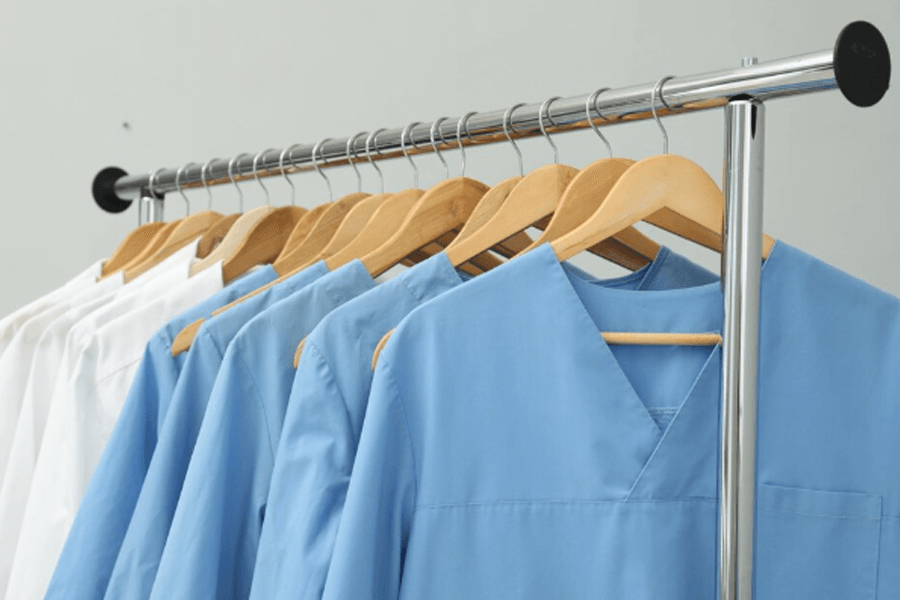
Let's start with active industries, such as construction, security, warehousing, logistics, healthcare and manufacturing. High-risk environments demand workwear that prioritises safety, durability and functionality. Construction sites require high-visibility clothing, steel-tie footwear, and often, flame-resistant materials. Security personnel need uniforms that project authority whilst allowing freedom of movement. Healthcare workers require easy-clean fabrics, antimicrobial properties and designs that still feel comfortable at the end of a long shift. Manufacturing, warehousing and logistics environments come with some very specific safety standards, including chemical-resistant materials, anti-static properties or heat-resistant fabrics, depending on what goods are being handled.
Wholesale purchasing from professional suppliers ensures you comply with industry regulations cost-effectively and consistently. Always check the specs on safety gear, especially BS compliance.



customer or client-facing environments
Next, there are what we might call style-focused environments, such as offices, education facilities, retail and hospitality - places where staff need to look clean, smart, fashionable and together. Office workwear should reflect the company's culture whilst maintaining professionalism. Some offices demand a traditional interpretation of "smart" - regular suits for men, and trouser or skirt suits for women - while others adopt a more smart casual look. Schools require clothing that withstands daily wear whilst projecting trustworthiness, discipline and professionalism. In retail environments, it's important that clothing aligns with the brand aesthetics. However, it still needs to be practical for long periods of standing, moving around the space and demonstrating products. Hospitality workwear should balance smartness with functionality, and in some industries, a degree of stain-resistance certainly wouldn't go amiss.
sizing and fit
You'll need to pay attention to sizing consistency across diverse body types. Professional workwear suppliers will provide size charts and fit guides, and it's always worth asking for samples before a big purchase. Consider ordering slightly larger quantities in popular sizes whilst maintaining smaller stocks of extreme sizes to keep things efficient. Many wholesale suppliers offer customisation services, including embroidery and screen printing. If you can make the bulk purchase and have the clothing customised in one transaction, you're sure to save money and get better consistency.
quality assessment and budget planning
Whether it's from samples or online specifications, make sure you examine fabric composition, construction techniques and finishing details if you get the chance. Higher-quality garments may cost more initially, but they'll need replacing less often and will look professional for longer. For safety gear, where this is non-negotiable, that matters even more than for regular workwear. Of course, nothing lasts forever, so try to work out how much wear you'll get out of garments before they need replacing, as these are not one-off costs and they need budgeting for annually. Also, remember to include the costs of laundry and maintenance, as they too are unavoidable in most sectors.
housekeeping
If you'll be storing the clothing at your premises until it's needed (for both new and laundered clothing), make sure you've got somewhere to keep it where it will remain clean, pressed and available to those who need it. It's best if you have a dedicated space that's arranged into styles and sizes so staff or managers can quickly grab clothing and give it to new employees, or anyone who needs an emergency replacement. Again, this needs to be budgeted for, and people need to be assigned to the task, as you'll need to keep track of what you have left and what has gone out of your stock.
By paying attention to all the details and keeping on top of your stock, you should have a seamless workwear operation within your business. The better you plan it, the more efficiently it will work for you. Ask about opening an account with Screen Textiles to assure a cost-effective, consistent supply of workwear for your company.